
Oregon Has No Full Warrant Index
There is no complete statewide public Oregon warrant name search. Law enforcement can use criminal justice networks and electronic warrant tools that are not open to the general public. A public trace appears only where the responsible office chooses or is allowed to disclose it. An Oregon Circuit Court register may show that a bench warrant was issued, served, recalled, or quashed in a known case. That register is still not a clearance search. A city municipal court warrant may exist only in the city's system, while a justice court warrant can remain outside Oregon Judicial Department tools altogether.
Start with every place tied to the event, not only the subject's current home. Relevant venues include the county of an alleged offense, the city printed on a citation, and the county supervising probation or post-prison release. Use the Oregon county directory to reach the right circuit court and sheriff. Then identify any municipal or justice court involved. A sheriff may confirm only warrants it serves and may not reveal a sealed order from another agency.
Important: No online result is not proof of no warrant because Oregon public coverage is split among courts, sheriffs, cities, and supervision agencies.
Types of Oregon Warrants
The issuing authority and underlying proceeding determine where an Oregon warrant record can be found. Similar labels can have different practical effects. Court staff can describe the docket, but they cannot advise a person how to respond.
- Arrest warrant: a judge authorizes arrest after a probable-cause or charging process; the court and serving agency hold different execution details.
- Bench warrant: a court issues it after failure to appear, failure to comply, or another violation of an order.
- Search warrant: it authorizes a search or seizure; the application, affidavit, return, and inventory may remain sealed during an investigation.
- Supervision warrant: a probation, parole, or post-prison matter may involve the court, community corrections, the Board, or Oregon DOC.
- Fugitive warrant or hold: another jurisdiction may request custody, even when the local jail page does not publish the originating warrant.
- Civil enforcement order: a narrow body attachment can enforce appearance or compliance, but ordinary consumer debt alone is not an Oregon arrest ground.
A failure-to-appear entry can arise in a criminal, violation, or local traffic case. A detainer is different. It tells a custodian to notify or transfer a person to another authority and may outlast the present case. Likewise, a show-cause order directs a person to explain compliance and is not automatically an arrest warrant.
Note: Match the Oregon warrant label to its issuing authority before deciding which court, sheriff, or supervision office can confirm it.
Search Oregon Warrant Records Safely
Gather the full legal name, date of birth, former names, likely county or city, and any case or citation number. Exact numbers reduce false matches. Search the free OJD Records and Calendar Search for a known circuit case, then read its register for warrant events. The tool covers public OJD cases, not a complete warrant roster and not local municipal or justice cases.
- Inventory each Oregon county, city, or supervision venue connected to the matter.
- Search the OJD register by exact case number first, then by name if needed.
- Contact the circuit criminal clerk and any cited municipal or justice court through an official government listing.
- Ask the county sheriff's warrants or records unit whether it confirms active status by phone, counter visit, or written request.
- Confirm whether the docket now says active, served, recalled, quashed, or replaced before taking action.
- For a public copy, request the precise warrant, return, or status entry from its custodian.
Use a record-focused request. Give the exact case, court, and event date, then ask what non-legal-advice instructions the court publishes for arranging an appearance. Never trust an unsolicited caller who demands gift cards, cryptocurrency, or a wire to avoid arrest. End the call and independently find the court or sheriff number.
Oregon Warrant Search Fields
Oregon local systems differ, so no single required-field set applies statewide. The best searches pair identity with a jurisdiction or official number.
| Field Label | Type | Required | Use |
|---|---|---|---|
| Case or warrant number | Text | Best when known | Links the question to one issuing court or order |
| Last and first name | Text | Usually for name search | Use exact spelling and check former names or aliases |
| Date of birth | Date | Varies | Helps separate people with the same name |
| County, city, or court | Location | Essential for routing | Identifies circuit, municipal, justice, sheriff, or supervision custodian |
| Issue or event date | Date range | No | Narrows a docket or written public-record request |
A public-record request can also state the exact item sought, such as an active-list entry, signed order, service return, booking hold, or service log. Include contact information, preferred electronic format, and a request for a cost estimate. Do not send a full Social Security number in ordinary email.
Note: An exact Oregon case number usually produces a safer match than a name-only search involving a common name or alias.
What Oregon Warrant Records Show
A public list entry is not the signed warrant. Fields also vary because a sheriff list, court register, and booking hold answer different questions. A typical public Oregon warrant result may contain the following details.
| Field | What It Shows |
|---|---|
| Subject | Legal name, aliases, and limited age or identity detail |
| Warrant or case number | The identifier used by the issuing court or agency |
| Issuing venue | Court and county or city responsible for the order |
| Issue date and type | When the order began and whether it is arrest, bench, search, or another form |
| Underlying allegation | Charge, missed appearance, supervision issue, or other basis stated publicly |
| Release notation | Security, geographic limit, hold, or no-release notation when publicly displayed |
| Status | Active, served, returned, recalled, quashed, or vacated as of the source update |
Read event terms carefully. “Returned” can mean law enforcement filed a return and does not by itself mean cancellation. “Served” records execution. “Recalled,” “quashed,” or “vacated” signals judicial cancellation, but a later replacement may exist. Current status should come from the issuing court or agency.
The Oregon court-record statutes explain the framework for court files and protected personal information.
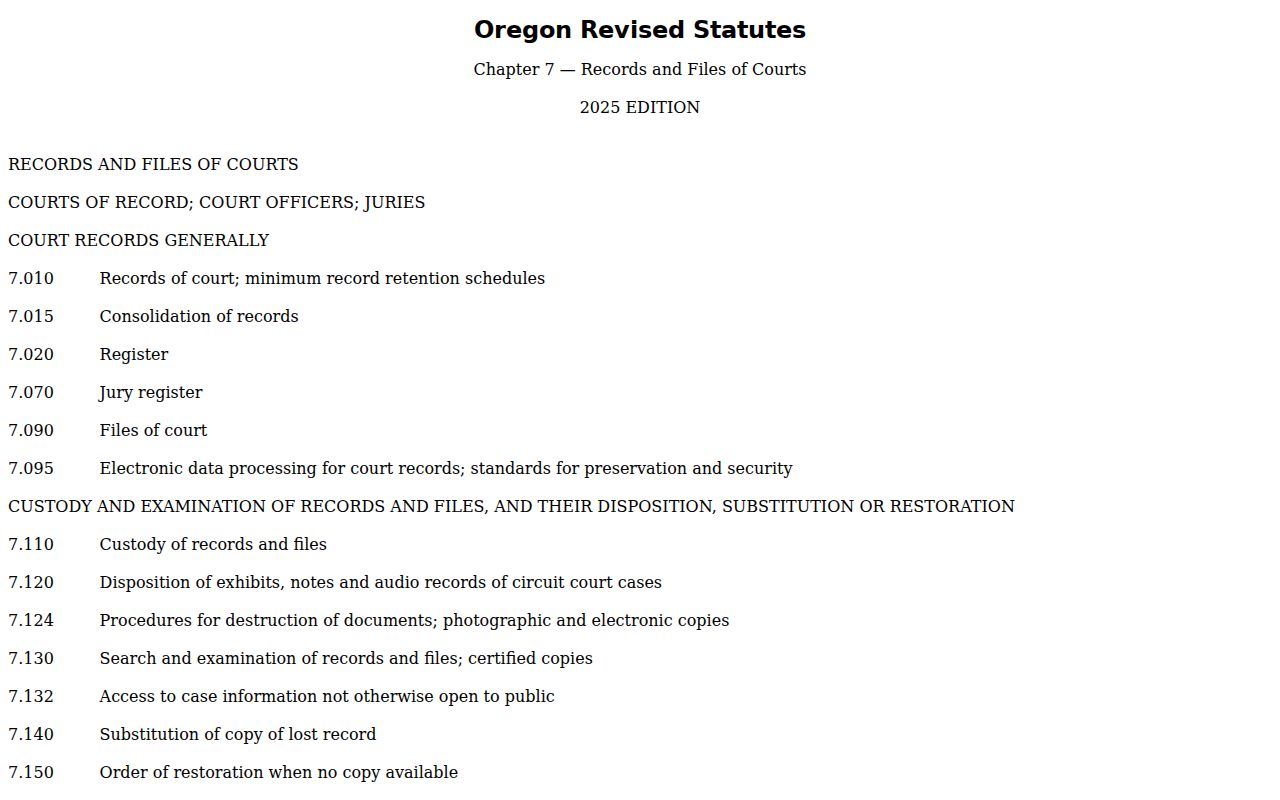
Those rules help explain why a public register can show a warrant event while protected identifiers or sealed material remain unavailable.
Restricted Oregon Search Warrants
A search-warrant file may contain the application, probable-cause affidavit, signed warrant, return, inventory of seized items, motions to seal, sealing orders, and later suppression filings. Unexecuted or active-investigation material can be sealed so disclosure does not defeat the search or expose witnesses, victims, informants, devices, premises, or investigative methods. Execution does not guarantee instant publication. Ask the court records unit whether the warrant has a separate miscellaneous number or was filed into a criminal case.
Juvenile matters, protected investigations, sealed cases, victim data, and some personal identifiers also fall outside ordinary public access. A sheriff or executive agency may cite investigative, safety, privacy, or court-order restrictions. Ask for nonexempt portions, but an Oregon Public Records Law request cannot override a judicial sealing order.
Federal warrants are a separate system. The U.S. Attorney's Office for the District of Oregon prosecutes federal cases, while federal courts and the U.S. Marshals handle federal judicial records and execution.
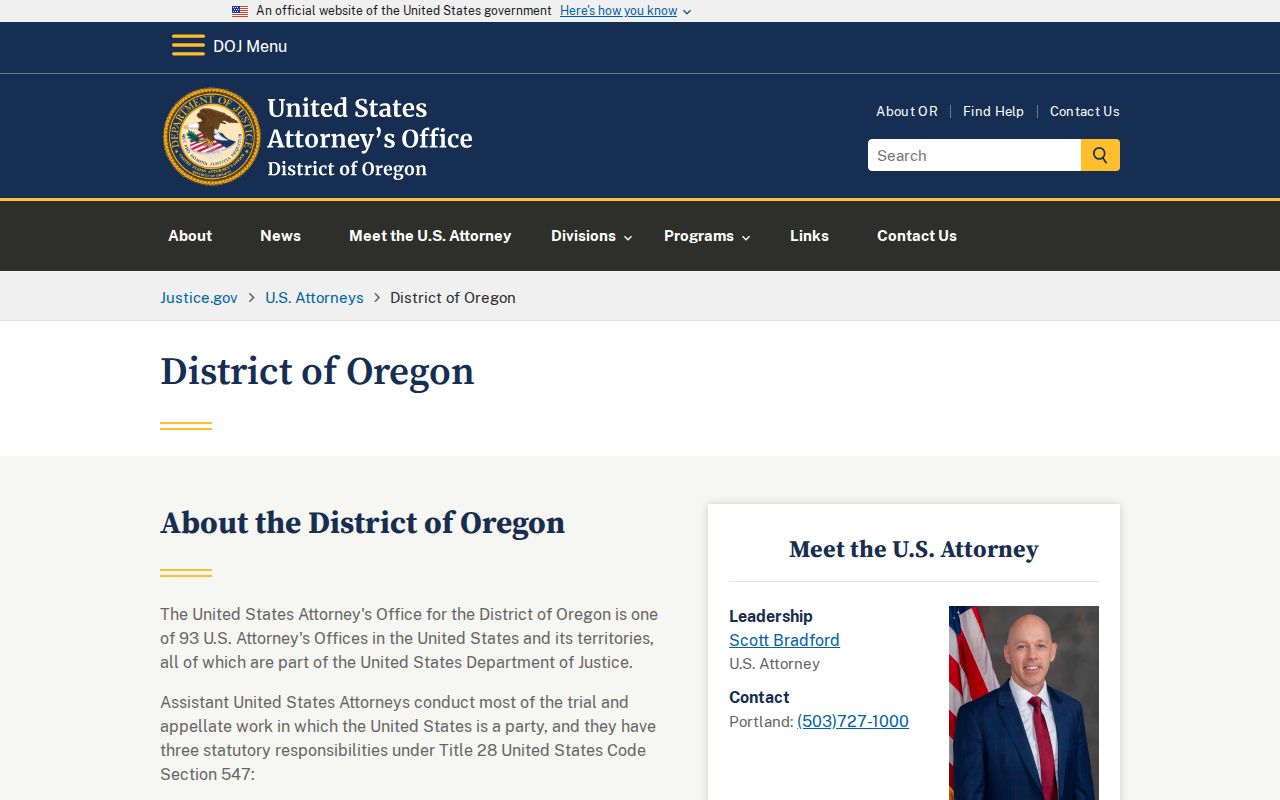
A federal source does not replace county and state checks, and it does not provide a general public federal warrant clearance search.
Note: Ask the Oregon filing court whether a search-warrant record has a separate number before requesting it under the criminal case.
Resolve an Oregon Warrant
Do not walk into a courthouse expecting immunity. Contact a licensed Oregon criminal-defense lawyer or the issuing court to learn its published procedure. Only the issuing judge or court can recall its warrant. A lawyer may seek recall or quashing, arrange an appearance or surrender, explain a missed date, or clarify release conditions. Court staff can provide dates and payment procedures, not legal strategy.
Bring the case number and valid identity. Preserve proof of notice problems, illness, compliance, or payment. If security is allowed, use only the jail or court's official method. A historic “bond” amount on a cached page may not reflect current Oregon pretrial rules or the present release decision. For a traffic failure to appear, clearing the court warrant may not restore driving privileges. Obtain proof of court compliance and verify status separately with Oregon DMV.
Important: Keep the signed recall or quash order, updated register, hearing notice, receipts, and any separate DMV compliance or reinstatement records.
Oregon Warrant Tips and Notices
Most-wanted and Crime Stoppers activity is local or regional in Oregon. No official statewide public tip system was documented as a substitute for county warrant checks. Follow only a sheriff, police department, or locally identified Crime Stoppers channel reached from an official agency source. A tip line collects information for law enforcement; it does not confirm that a court warrant remains active and cannot provide a certified order.
Do not approach a person shown on a wanted notice. Give urgent information to emergency services and non-urgent information through the agency's published route. Before sharing a notice, check its date and current source because a warrant may have been served, recalled, or replaced. An old image or repost can remain online after the legal status changes.
Find Oregon Warrants by County
Oregon has 36 counties, and the correct route follows the case rather than residence. Open the Oregon county directory for every county where a case, arrest, citation, or supervision matter arose. Check the circuit court, the sheriff, and any municipal or justice court tied to that event. Some sheriffs publish a most-wanted page, while others confirm limited information by phone or written request. Oregon DOC Corrections Most Wanted covers selected absconders only and is not an all-court index.
If a person is already in custody, a jail roster may display a hold or detainer. The underlying warrant can still belong to a different court or state. Use the booking information to identify that authority, then request the source order. Immediate safety concerns belong with counsel or an official non-emergency line. Do not approach a wanted person.
A public most-wanted notice serves a narrower purpose than an Oregon warrant search. It usually highlights selected people an agency seeks and may show a photograph, description, accusation, and contact instructions. It does not list every active order. Coverage and update cycles differ among sheriffs, cities, and Oregon DOC. Report information only through the official agency channel, and do not treat absence from a most-wanted page as clearance.
For historical research, ask the responsible custodian for existing records within a defined date range. A court can supply public docket entries or orders, while a sheriff may hold service logs, active-list entries, or booking holds. Requesting the right document reduces delay and clarifies which office can certify it. If an agency denies part of the request, ask for the legal basis and any nonexempt portion that can be separated.
Note: Verify each Oregon warrant through the issuing court or serving agency because an online list can lag a service, recall, or replacement order.